
The Receipt
On July 2, 2026, Ottawa and Alberta submitted a joint proposal to the federal Major Projects Office for a new West Coast crude oil pipeline: over one million barrels per day from Bruderheim, Alberta, to a deep-water terminal at Roberts Bank, British Columbia [1]. Both the Prime Minister and Alberta’s Premier had said repeatedly that the pipeline would move forward only if private capital led the financing [4][5]. The ownership structure tells a different story. Canada and Alberta will each hold roughly 45 percent through Crown vehicles. Pembina Pipeline Corporation holds the remaining 10 percent under a non-binding agreement, with no capital at risk before its own final investment decision [3]. No oil producer has publicly committed to ship on the line. No toll structure has been filed. No competitive bids were received.
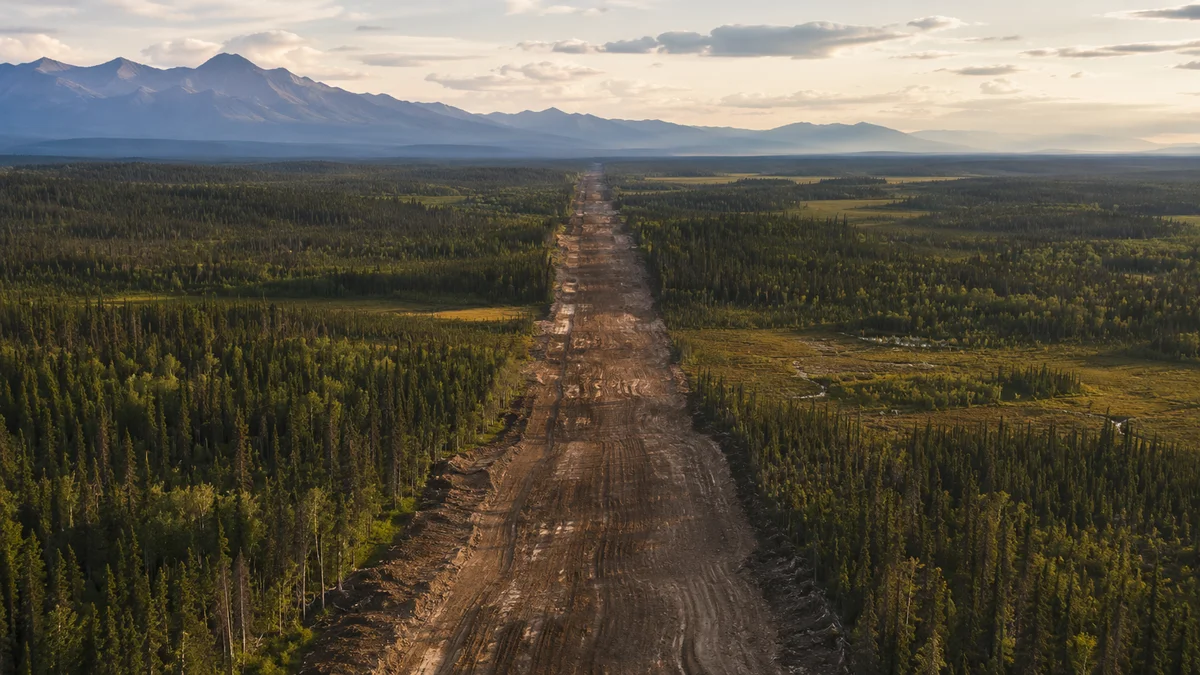
The estimated cost is $35.2 billion to $43.7 billion before financing and inflation during construction [1], figures that would push the all-in total well above $50 billion. The project would follow the same corridor where the Trans Mountain Expansion rose from $5.4 billion to $34.2 billion in nominal terms [8][9], under a Crown corporation now named as lead proponent for the new line.
The Prime Minister who co-chaired a $130-trillion global coalition to redirect financial-sector capital toward net-zero objectives [6] now leads a government that cannot attract private capital for a fossil fuel pipeline. But the structural finding is more specific than the irony suggests. Global capital is abundant [18][19]. Banks and investors have signalled interest in Canadian infrastructure. The binding constraints are not ideological; they are commercial: construction-cost history, uncompetitive toll economics, a circular dependency with carbon capture obligations, and uncertain demand at the delivery horizon. The capital markets did not pass on this project because of net-zero commitments. They passed on it because the numbers do not produce a private bid.
The July 2 announcement had everything pipeline advocates had called for. A federal government publicly aligned with expansion. An Alberta premier who had spent two years building the regulatory case. A southern route selected to avoid the northern tanker ban and the strongest First Nations opposition. A national interest designation on the October timeline under the Building Canada Act. A companion deal with British Columbia securing the transit province’s acquiescence [16]. What should have followed was a queue of private-sector partners offering to build, finance, and operate the line. Instead, the federal and provincial governments announced they would do it themselves [2], at 90 percent public ownership, with the only private participant holding an agreement structured to eliminate its own risk [3].
Three Projects, Three Losses
The capital markets have recent memory of Canadian pipeline construction. In 2014, the federal government approved Enbridge’s Northern Gateway pipeline to the British Columbia coast. Two years later, that approval was overturned. Enbridge wrote off $373 million in development spending [10]. In 2017, TC Energy cancelled the Energy East pipeline after years of regulatory scope expansion and took an after-tax charge of approximately $1 billion [11]. In 2018, Kinder Morgan announced it would not proceed with the Trans Mountain Expansion and sold the project to the federal government for $4.5 billion rather than carry the construction risk. The Crown corporation that took over delivered the expansion at a final cost of $34.2 billion in nominal terms, roughly six times the original $5.4 billion estimate filed with the National Energy Board in 2013 [8][9]. Adjusted for inflation, the real increase was approximately three to four times the original figure. Extraordinary by any infrastructure standard.
Three consecutive pipeline projects. Three private proponents that either lost their entire development investment or walked away rather than continue. The lead proponent named for the new West Coast pipeline is the same Crown corporation that built TMX from $5.4 billion to $34.2 billion on the same corridor.
The $130 Trillion Alignment
In April 2021, Mark Carney launched the Glasgow Financial Alliance for Net Zero as UN Special Envoy for Climate Action and Finance. By COP26 that November, GFANZ had assembled more than 450 financial institutions managing over $130 trillion in assets, committed to aligning their portfolios with net-zero objectives [6]. The alliance’s stated goal was structural: embedding climate considerations into every financial decision, not confining them to niche green-finance products. Michael Bloomberg served as co-chair. Carney held the role from GFANZ’s inception until January 16, 2025, when he resigned all positions to seek the Liberal leadership [7].
The domestic policy architecture pointed in the same direction. Between 2019 and 2024, the federal carbon price was legislated to reach $170 per tonne by 2030. The Oil Tanker Moratorium Act closed British Columbia’s northern coast to crude tanker traffic. The Impact Assessment Act expanded the scope and duration of federal environmental reviews. Each measure was defensible on its own terms. Together, they constructed an environment in which private capital consistently concluded that the risk-adjusted return on Canadian pipeline construction was negative.
The expectation this creates is straightforward: GFANZ and the domestic policy framework redirected capital away from fossil fuel infrastructure, and the current financing gap is the result. The evidence does not support that conclusion.
GFANZ was already unravelling before Carney resigned. In late 2024 and early 2025, Goldman Sachs, Wells Fargo, Citigroup, Bank of America, and Morgan Stanley withdrew from the Net-Zero Banking Alliance or signalled they would exit if governance rules tightened [23]. The anti-ESG movement in U.S. state legislatures further weakened net-zero commitments across the financial sector. If GFANZ-affiliated capital reallocation were the binding constraint on Canadian pipeline investment, its collapse should have freed capital to return. It did not.
The stronger explanation comes from within the capital markets themselves. RBC CEO Dave McKay has said publicly that global pools of capital exceed $150 to $200 trillion and that international investors are actively interested in Canadian infrastructure [18]. Capital, in McKay’s framing, is “impatient” — it will flow to projects that demonstrate viability, and it will leave jurisdictions that cannot advance projects quickly [19]. The challenge, RBC argues, is execution and policy certainty. Not ideology.
This makes the structural finding more precise. The capital is available. Investors have expressed willingness. And the project is still 90 percent public. The gap between willing capital and actual investment is not a consequence of net-zero commitments. It is a consequence of the project’s own fundamentals: construction-cost precedent on the same corridor, the absence of shipper commitments, a toll structure that has not been shown to be competitive, and a delivery horizon that extends into a period of uncertain global demand. The Prime Minister who helped build the net-zero capital framework is now discovering that unwinding it would not solve his pipeline’s financing problem, because the problem was never about ideology. It was about risk.
The Terms Tell the Story
Pembina Pipeline Corporation signed a non-binding Heads of Agreement on July 3, 2026 [3]. The terms: a 10 percent economic interest during construction, carried with no at-risk development capital before Pembina’s own final investment decision. An option to increase to 20 percent at commercial operations. Full discretion over whether to proceed at FID. In corporate finance, this is an option, not a partnership. Pembina retains the right to observe the project through its entire construction phase, commit no money, and walk away if the economics do not improve.
As of July 2026, no oil sands producer has publicly committed to ship on the proposed pipeline. No announced precedent agreements exist from Suncor, Canadian Natural Resources, Cenovus, Imperial, MEG Energy, or any other Oil Sands Alliance member. No formal open season has been conducted. No toll schedule has been filed with regulators [1]. Industry commentary has been cautious: a Cenovus executive characterized the project as “unfinanceable” under present terms [21]. The Pembina Institute, an environmental policy organization unrelated to Pembina Pipeline, observed that if the project represented a viable commercial venture, private companies would have put up the capital themselves [24].
Both the Prime Minister and the Premier had set the bar themselves. In July 2025, Carney told Reuters that any pipeline plan “would be up to the private sector to make the proposal” rather than a top-down government approach [4]. In June 2025, Smith told Bloomberg she hoped “all financing for a new oil pipeline would come from the private sector” and that governments “would not have to provide financial backing” [5]. Twelve months later, the governments are providing 90 percent of the financial backing, and the private sector’s 10 percent is non-binding.
The Toll Problem
TD Securities estimated the proposed pipeline’s toll at approximately US$10.50 to US$15.00 per barrel [12]. For comparison, Enbridge’s existing Mainline charges an uncommitted toll of approximately US$9.83 per barrel to move crude to the U.S. Midwest [13], and Keystone’s toll to the Gulf Coast is approximately US$8.65 per barrel [14]. Both routes deliver crude directly to North American refineries without additional marine shipping costs.
The new pipeline would deliver crude to Roberts Bank for tanker shipment to Asia. That introduces marine freight costs on top of the higher toll. On a raw cost-to-market basis, the proposed route is more expensive than alternatives that already exist and have available capacity.
The strongest counter-argument deserves full weight. Asian refiners generally pay a structural premium for Canadian heavy crude over Gulf Coast prices, and that premium could offset the toll and freight differential. If the premium is durable and large enough, the netback to the producer could be competitive with or better than existing routes. This is the commercial case for the pipeline, and it is not frivolous. But it requires two conditions that no shipper has yet been willing to underwrite: the premium must be large enough to close a gap measured in dollars per barrel, and it must remain large enough across a construction timeline that extends to 2034 and a demand horizon that extends beyond it. No producer has signed a contract reflecting that confidence.
The Circular Dependency
The federal government formally tied the pipeline’s accelerated regulatory pathway to the Pathways carbon capture and storage project [15]. The Canada–Alberta Implementation Agreement, signed May 15, 2026, makes the two “mutually dependent.” Ottawa’s commitment to fast-track the pipeline through the Major Projects Office is conditional on Alberta and the Oil Sands Alliance delivering Pathways, which would capture approximately 16 million tonnes of emissions annually.
Pathways itself has struggled to attract private capital. Oil sands companies have said publicly that the project requires substantial government subsidies to proceed. Meanwhile, the same Implementation Agreement sets the industrial carbon price at $95 per tonne through 2026, rising to $115 by 2030, $130 by 2035, and $140 by 2040 [15], replacing the previous federal plan of $170 per tonne by 2030. The reduction is significant. But companies still face the combined cost of carbon compliance, Pathways capital contributions, and potential shipper commitments on a new pipeline simultaneously.
The structure creates a loop. The pipeline needs Pathways to proceed on a fast-track basis. Pathways needs tens of billions in investment that the oil sands companies say requires subsidies. The subsidies come with carbon-performance obligations that increase per-barrel costs. Higher per-barrel costs reduce the margin available to absorb a new pipeline’s toll. And the pipeline needs shippers willing to absorb that toll. Each element is individually rational. Together, they form a dependency chain in which no single actor can move first without the others moving alongside.
The Demand Horizon
The proposed pipeline would not reach construction completion until 2032 to 2034. The Roberts Bank terminal would not be fully operational until 2038 [1]. That timeline places the project’s commercial viability in a period of contested global oil demand.
The International Energy Agency’s most recent projections show global oil demand plateauing in the early to mid-2030s under stated policy scenarios [22]. China’s oil demand growth has already slowed as the country expands renewable energy generation and electric vehicle adoption. These forecasts are contested: alternative projections from OPEC and industry groups show demand remaining robust through 2040. But the disagreement itself is the structural point. Private capital must model terminal value across a delivery horizon where the demand trajectory is uncertain, and that uncertainty is priced into the reluctance to commit.
The supply side compounds the question. No major greenfield oil sands project has been sanctioned in Canada since the mid-2010s. Growth has come from brownfield expansion: debottlenecking existing facilities, adding well pads to operating SAGD projects, and phasing in approved but previously unbuilt capacity. These expansions have added meaningful production. But the structural question is whether the brownfield model can produce an additional million barrels per day of committed, contracted volume for a new pipeline — particularly when lower-risk capacity options exist, including optimization of the existing Trans Mountain system to 1.2 million barrels per day with drag-reducing agents and approximately 30 kilometres of new pipe [1].
The B.C. Royalty Precedent
Hours before the Calgary pipeline announcement, the Prime Minister and British Columbia Premier David Eby signed a Cooperative Prosperity Agreement in Vancouver [16]. Under the agreement, British Columbia will receive an annual royalty payment from the pipeline operator. The amount has not been publicly disclosed. The federal government will assume financial liability for environmental incidents and spills. Ottawa also committed $10 billion to Roberts Bank infrastructure investment covering the oil terminal, dredging, roads, and the container Terminal 2 expansion [16]. For context, the port authority’s own cost estimate for the container terminal component alone was $3.5 billion; the larger federal figure covers the full infrastructure package.
In exchange, British Columbia will not challenge the pipeline in court. Eby framed the province’s position in constitutional terms: “We recognize our constitutional position and we do not have the authority to stop a new pipeline” [17]. The agreement explicitly states that British Columbia does not seek the project.
The structural concern is the precedent. Jack Mintz at the University of Calgary School of Public Policy has warned that allowing a transit province to collect a royalty on pipeline throughput creates a template for interprovincial trade barriers [20]. If British Columbia can extract an annual payment for hosting a pipeline, other provinces could assert similar claims on goods and commodities crossing their territory. The royalty amount is undisclosed, but the precedent is established regardless of the dollar figure.
The Pattern
The structural pattern documented in this piece is not unique to pipelines. Across multiple policy files, Canadian governance produces a recurring sequence: warnings exist in the public record, policy advances over those warnings, and the eventual correction costs more than if the warnings had been heeded.
In the pipeline file, private capital signalled for a decade that it would not bear Canadian construction risk. Three consecutive projects confirmed the signal. Policy continued to layer regulatory constraints, including the carbon pricing trajectory, the tanker ban, and the Impact Assessment Act, that compounded the commercial deterrents already documented in the market. When the correction arrived — and the political 180 is a genuine correction — the government had reversed its position on pipelines but could not reverse the structural conditions its prior framework had reinforced. The result: 90 percent public ownership at $35 to $44 billion, multiples of what the cancelled private projects would have cost.
The carbon-pricing trajectory follows the same shape. The previous federal plan set the industrial carbon price at $170 per tonne by 2030. Industry warned the trajectory was unsustainable. The May 2026 Implementation Agreement corrected it to $140 per tonne by 2040, a decade’s delay [15]. The correction was framed as a feature: $250 billion in compliance cost savings for Alberta industry. But the savings exist only relative to a target the market had already rejected. The correction acknowledged that the original trajectory was set above what the economy would absorb, and the cost of the overshoot was borne by the credibility of the pricing framework itself.
Immigration and housing policy contain versions of this dynamic that warrant separate examination. In each case, documented capacity constraints were overridden by policy expansion, and the subsequent correction imposed costs exceeding what the constraints would have cost to address when they were identified. Those files will be developed in future pieces in this series.
The pattern is structural, not personal. Different actors, different policy domains, different mechanisms. What recurs is the governance dynamic: individual decisions that are defensible in isolation produce aggregate outcomes that are more expensive to correct than to prevent.
What Would Change This Assessment
Three conditions would challenge this article’s structural finding. Each is specific and testable.
- A binding shipper commitment from one or more oil sands producers at unsubsidized toll rates sufficient to cover the project’s capital costs, demonstrating commercial viability that does not depend on government incentives to close the gap between the proposed toll and existing alternatives.
- Meaningful private equity participation with capital at risk during construction, not structured as a carried interest or an option exercisable after commissioning. The test is whether private capital will bear construction-phase risk on this corridor, not whether it will buy into a completed asset.
- A disclosed toll and netback analysis demonstrating total cost-to-market competitiveness with existing pipeline routes on a delivered-value basis, accounting for the Asian market premium and the marine freight differential to destination refineries.
If any of these conditions is met before final investment decision, the 90/10 ownership split will no longer represent the structural finding this article documents, and The Receipts will revisit the analysis.