
The Receipt
Canadians voted in April 2025 with clear priorities. Polls and post-election surveys confirmed the top one: deal with Trump. Behind it: affordable housing, healthcare, and cost of living [1][2][3]. The government committed to all of them.
A year and a half in, the record is measurable. There is no deal with the United States. Talks collapsed on August 22, 2026, with 50% American tariffs now in effect on $27.6 billion of Canadian goods [4][5]. On the domestic side, several commitments are delivered: a tax cut, the consumer carbon charge repeal, immigration controls tracking to target, and the expansion of the Canadian Dental Care Plan. The government also built new institutional architecture: a Major Projects Office, a housing Crown corporation, a defence procurement agency, and legislation expanding executive authority over project approvals.
But on the voter priorities that drove the election — housing, healthcare, a deal with the U.S. — the measurable outcomes have not kept pace with the machinery built to deliver them. Housing starts are projected to decline through 2028 [6]. Half of Canadians cannot access a family doctor [7]. The structures are in place. What they were built to deliver is not yet visible in the data.
In April 2026, The Receipts published The Mandate, documenting what Canadians signaled through polls and votes, and what the Carney government committed to through its platform, Throne Speech, mandate letter, and budget [1]. That article established a starting line across five areas: trade and sovereignty, affordability and housing, healthcare, climate and energy, and immigration. It inventoried the platform commitments on defence, fiscal policy, internal trade, and more.
This article measures the distance from that starting line. The record runs through late August 2026, roughly sixteen months from the April 28, 2025 election. For each commitment, the public record shows one of three things: action that produced a measurable outcome, action that created an institution or framework without a measurable outcome yet, or no significant movement.
No Deal
Dealing with Trump was the single clearest voter signal of the 2025 election. Nanos tracking during the campaign showed Trump and U.S. tariffs as Canadians' leading unprompted national concern [2]. Leger's post-election survey found that 29% of voters identified Trump's tariffs as the issue that most influenced their vote [3]. The government's own mandate letter listed establishing a new economic and security relationship with the United States as priority number one [8].
The record at a year and a half: there is no deal. On August 22, 2026, the United States imposed 50% tariffs on $27.6 billion of Canadian goods under Section 338 of the Tariff Act of 1930, after three days of talks in Washington ended without agreement [4]. Canada announced dollar-for-dollar countermeasures effective September 8 [5]. The USMCA has not been renewed by the United States. This is the record as of publication. The trade file remains live, and talks could resume.
Trade diversification, the government's parallel strategy, is underway but narrow. Canada-EU merchandise trade has increased more than 77% between 2016 and 2025 [9]. Ksi Lisims LNG construction started in May 2026, with Germany's SEFE signed as the first European purchaser of Canadian liquefied natural gas [10]. Canada signed a new trade agreement with Ecuador and opened EU digital trade negotiations [11]. But even after an unusually large diversification shift in 2025, 71.7% of Canadian merchandise exports still went to the United States [12]. TD Economics found that much of the non-U.S. growth was concentrated in a relatively narrow group of commodities rather than broad-based industrial expansion [13].
The Major Projects Office, formed in August 2025 to fast-track critical infrastructure, has referred fifteen projects [14]. Its flagship speed claim deserves examination. Ksi Lisims LNG went from MPO referral to construction in six months. The environmental approvals behind that timeline were completed over four years by the BC Environmental Assessment Office and the Impact Assessment Agency of Canada, including more than fifty technical studies and consultation with six Indigenous nations [15]. Both the provincial environmental assessment certificate and the federal decision statement were issued on September 15, 2025, before the project was referred to the MPO [16]. The MPO coordinated what came after the approvals. It did not produce the approvals.
On internal trade, the government delivered early. The Free Trade and Labour Mobility in Canada Act received Royal Assent on June 26, 2025, within two months of taking office, and came into force January 1, 2026 [17]. It removed all remaining federal barriers to internal trade. Provincial barriers remain [18].
On defence, NATO's 2% spending target was met for fiscal 2025-26, announced March 26, 2026, for the first time in roughly thirty-five years, with over $63 billion in annual defence expenditure [19]. The new commitment is 5% of GDP by 2035 [20]. The most recent available DND delivery indicator, from 2024-25, showed only 44% of capital equipment projects on schedule against a target of 90% [21]. The money moved. The equipment has not kept pace.
The strongest defence of the government's trade record is also the most important context for everything that follows. The second Trump administration did not merely consume governing bandwidth. It materially changed the economic assumptions underlying the government's domestic program: investment incentives, fiscal planning, supply chains, projected GDP, and the conditions under which every domestic commitment was made. A government elected on one macroeconomic baseline can reasonably argue that a severe external trade shock required redirecting fiscal, regulatory, and institutional capacity. That argument deserves its full weight. The surviving finding is narrower: the central external objective identified first in the mandate letter has not produced a bilateral settlement, and additional tariffs are now in force.
Housing
The platform committed to a GST exemption for first-time homebuyers, a new Crown corporation to build housing directly, and a Throne Speech goal of doubling the rate of home building [22][23].
The GST exemption is law. Bill C-4 received Royal Assent on March 12, 2026, retroactive to March 20, 2025, offering up to $50,000 in savings on qualifying new builds [24]. The Parliamentary Budget Officer estimates that purchases receiving the rebate will equal about 5.4% of projected 2026 housing completions [25].
Build Canada Homes launched as a special operating agency in September 2025. Its Crown corporation legislation, Bill C-20, received Royal Assent in June 2026 [26]. Six initial direct-build sites are in the pipeline, expected to support roughly 4,000 homes. Including partnerships and other initiatives, the government reported in June 2026 that more than 11,000 homes were underway or nearing construction [27]. The transition to a fully operational Crown corporation, including governance and leadership appointments, was still in progress at that time.
The broader national data tells the rest of the story. CMHC recorded 259,000 housing starts in 2025, up 6% year-over-year [28]. That is healthy growth by historical standards, but it is not the pace the government described. CMHC projects starts will decline through 2026 to 2028 [6]. Condominium presales have weakened and unsold inventories are climbing [6]. The Throne Speech committed to doubling the rate of home building. The trajectory in the national data runs the other direction. National starts respond to interest rates, financing conditions, construction costs, and municipal permitting alongside federal policy. They are a system outcome, not a scorecard for any single institution.
Healthcare
The Canadian Dental Care Plan is the clearest voter-facing delivery story in the domestic agenda. Over six million Canadians are now enrolled, saving an average of roughly $900 per year [29]. The program was created under the previous government; the Carney government continued it and expanded eligibility to include the final adult age groups. It is operational and renewed for 2026-27.
The rest of the healthcare file is harder to read as progress. Angus Reid found that half of Canadians now report difficult or no access to a family doctor, up from roughly 40% in 2015 [7]. Separately, the 2025 OurCare survey estimated 5.9 million adults lacked reliable access to a regular primary-care professional [30]. The platform committed to connecting every Canadian with a family doctor or primary care team by 2030 [23]. Health Canada's own workforce model projects the family-physician supply-demand gap persisting through at least 2034, with a base-case shortfall of roughly 25,600 physicians by 2030 [31]. Health Canada has funded 120 new family medicine training positions for international medical graduates [32]. That is a start. The commitment was measured in thousands.
Family-doctor deployment is overwhelmingly a provincial responsibility. Federal levers operate through transfers, immigration policy, and credential recognition. The government made the commitment nonetheless, and the outcome data has moved in the wrong direction since it was made.
Federal fiscal projections show health-agreement funding falling from $4.3 billion in 2026-27 to $3.1 billion in 2027-28 [33]. The Canadian Centre for Policy Alternatives argues that the declining profile raises questions about renewal of expiring bilateral programs, including pharmacare [34]. No new pharmacare funding appeared in the Spring Economic Update [35].
Healthcare was not one of the seven standalone priorities in the mandate letter [8]. The record since is consistent with that structure.
Cost of Living
The income tax cut is delivered. The lowest bracket dropped from 15% to 14%, effective July 1, 2025, with the full-year effect starting in 2026 [36]. The Parliamentary Budget Officer estimates the cut saves the average taxpayer approximately $190 per year [37].
The consumer carbon charge is repealed. It was zeroed out on April 1, 2025, and formally eliminated through Bill C-4 [24]. Industrial carbon pricing continues at $95 per tonne [38].
Both commitments were delivered. The net effect on household costs is contested. The Canadian Taxpayers Federation argues that higher maximum CPP and EI deductions offset part of the income tax reduction for some workers [39]. A $190 annual saving is measurable. Whether it registers against the cost pressures Canadian households are facing is a question the affordability data has not yet answered.
Immigration
Immigration is the area where commitment and outcome most closely align in aggregate terms. Bill C-12, which gave the government binding authority to set and enforce immigration levels, received Royal Assent on March 26, 2026, with support from all parties [40].
The temporary resident population has dropped from a peak of 7.6% to 6.5% of the total population [41]. The Parliamentary Budget Officer confirms the government is on track to bring it below 5% by the end of 2027. The 2026-2028 Immigration Levels Plan reduced temporary resident arrivals by 43%, from 673,650 to 385,000 [42]. Permanent admissions are stabilized at 380,000 per year.
The trajectory is clear, though implementation challenges remain. As of June 30, 2026, IRCC reported more than 401,000 temporary-residence applications not yet finalized [43]. The Auditor General found that provinces reported insufficient consultation and late notification of allocation decisions under the new framework [44]. The commitment was to bring temporary immigration under control. The aggregate numbers show movement in that direction. The system administering it is still catching up.
New Offices, Old Problems
A pattern runs through the sections above. On trade, the government built a Major Projects Office. On housing, a Crown corporation. On defence, a procurement agency. Each was stood up within the government's first year.
The Building Canada Act, enacted within the One Canadian Economy Act, allows the Governor in Council to designate projects as being in the national interest [45]. For federal authorizations governed by the Act's covered enactments, required determinations, findings, and opinions are then deemed to have been made favourably, although the Act states that an authorization cannot be granted solely on that deeming provision and proponents remain subject to applicable requirements [45]. The May 2026 regulatory consultation proposed transferring environmental assessment decision-making authority to individual ministers [46]. The mandate letter itself changed shape: a single document to all ministers replaced the individual letters issued in 2015, 2019, and 2021 [8].
Three instruments carry the same feature: the Building Canada Act's deeming power, the proposed ministerial authority over environmental assessments, and the consolidated mandate letter. Each moves decision-making authority toward the executive and away from the multi-stakeholder processes that preceded them. Crown corporations like Build Canada Homes have a more complex governance relationship; depending on their statute, they can delegate operational decisions away from ministers rather than toward them.
Climate and energy, which the original Mandate tracked as a standalone signal area, shows the same split that runs through the domestic files. The consumer carbon charge was repealed as committed. But the government's own conservation indicators show Canada at roughly 14% of terrestrial and 15.5% of marine areas conserved, well short of the 30% by 2030 target [47].
The government also committed to making government itself leaner. The platform promised to cap public service size and reduce operating budget growth from 9% to below 2% annually [23]. During the campaign, Carney described his government as one that would significantly reduce reliance on external consultants [48]. Federal spending on management and other consulting services was $5.1 billion in 2024-25 [35]. Separately, the broader professional-and-special-services envelope in the 2026-27 Main Estimates is budgeted at more than $26.6 billion [49]. The government's planned response, announced in the Spring Economic Update, is a 20% reduction in management consulting over three years, with the first booked savings arriving in 2027-28 [35]. The reduction is scheduled. It has not started.
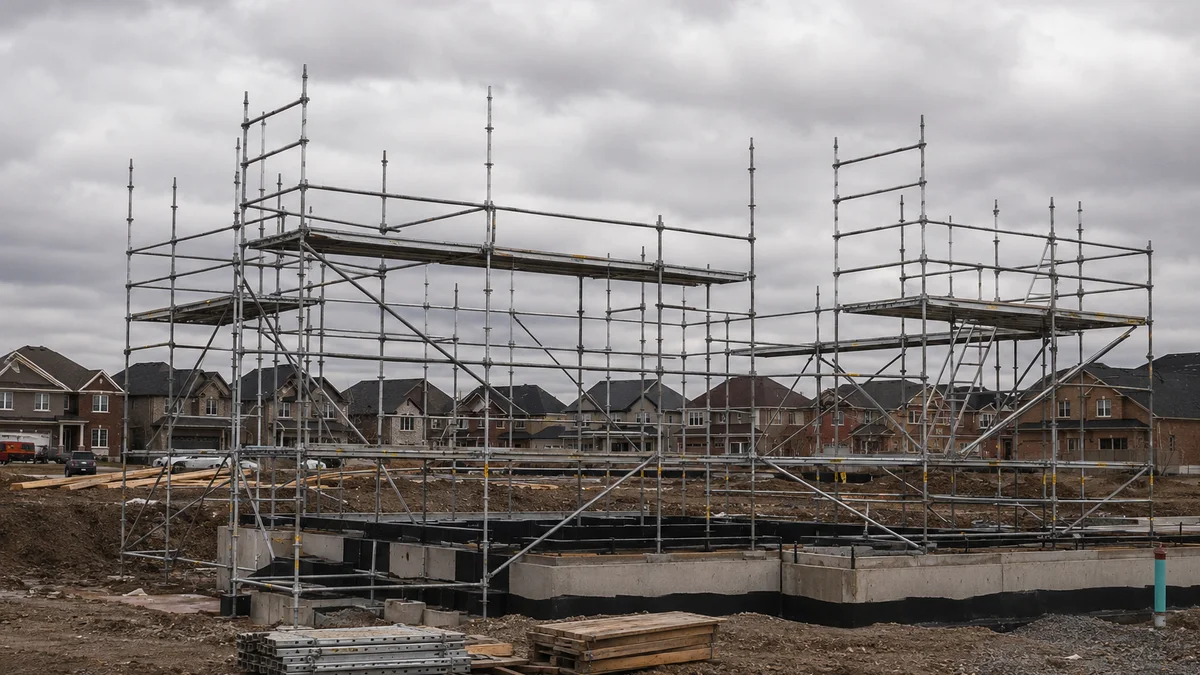
This is where the strongest counter-argument deserves its full weight. Building institutional capacity is the necessary precondition for delivery at scale. You cannot build housing at scale without a housing agency. You cannot fast-track major projects without a project coordination office. You cannot equip a military without a procurement body. The government is eighteen months into a four-year term, and every institution it created was built to produce results over years, not months. Measuring outcomes at this stage may be measuring scaffolding before the building goes up.
That case is not unreasonable. And the institutions have already produced intermediate outputs: a growing development pipeline at Build Canada Homes [27], a $2.3 billion Arctic satellite-communications contract through the Defence Investment Agency [50], and projects continuing to advance commercially through the MPO pipeline. The question is whether these translate into the end outcomes voters are waiting for — more homes occupied, shorter wait times, equipment delivered. That test cannot be completed at eighteen months. What can be measured now is that the institutional machinery exists, the planned consulting reductions have not yet started, and several of the voter priorities the machinery was built to serve remain where they were at the starting line.
What Would Change This Assessment
This assessment measures commitment against record at a point when most of these institutions are less than a year old. The following developments would weaken or change it:
- Build Canada Homes converts its announced pipeline into construction starts at a rate that exceeds pre-BCH comparable timelines, as measured by median months from site selection to construction start. The MPO demonstrates measurably shorter federal authorization times for referred projects compared with pre-reform cohorts. The DIA shows improvement in the percentage of acquisition projects remaining on approved schedule toward the 90% target.
- Canada and the United States conclude a binding bilateral agreement that materially reduces the Section 338 tariff burden on Canadian exports and establishes durable terms for the bilateral economic relationship.
- The next comparable national survey using the same methodology shows a statistically meaningful improvement in family-doctor access from the 2026 baseline.
- Public Accounts or Main Estimates data, using the same accounting category (management and other consulting services), show spending declining from the 2024-25 baseline in line with the government's scheduled reductions.