
The Receipt
On the morning of August 22, 2026, after trade talks with the United States collapsed overnight and 50 per cent tariffs took effect on roughly C$28 billion (about US$20 billion) in Canadian goods, Ontario Premier Doug Ford told reporters he was glad the deal died. Manitoba Premier Wab Kinew had spent the week saying Canada should fight. Quebec had never committed to restocking American alcohol. The federal Conservatives supported walking away.[1][2][3][4] The dominant political reaction across the country was not disappointment but endorsement of the walkaway, though not every premier shared that posture: Alberta Premier Danielle Smith said she was “deeply disappointed” and warned that tariffs and counter-tariffs hurt businesses, workers, and families on both sides of the border.[5]
Prime Minister Mark Carney says the United States introduced last-minute demands on Friday that made the deal untenable.[6] This article takes him at his word. But the premier reactions documented on Wednesday and Thursday were reactions to the deal before the U.S. changed it. The version Carney described as being on trajectory toward “the best deal in all of our strategic sectors” could not get Ford to publicly confirm he would restock bourbon, could not stop Kinew from telling Manitobans to boycott American products, and could not get Quebec to commit.[7][8][9] Other premiers were more optimistic: Nova Scotia’s Tim Houston described himself as confident in the process, and British Columbia’s David Eby said substantial progress had been made.[7] The premier response was not uniform. That is the point.
After 18 months of Team Canada, Canada’s lead negotiator sat across from a president able to move major tariff rates and deadlines through executive action, while the Canadian side could not describe its own consensus. One premier said all had agreed to restock American alcohol. Others immediately contradicted him. Ottawa could negotiate the international framework, but it could not itself guarantee implementation of the provincial liquor and procurement commitments Washington was demanding. The public record does not show premiers collectively adopting specific minimum terms defining what deal they would implement. Team Canada was a consensus to reject. It was never a consensus to accept.
This piece is a sequel. On August 19, 2026, as the U.S. paused 50 per cent tariffs for 72 hours, The Receipts published an assessment: Team Canada Was Built to Say No Together. The Pause Requires It to Have a Unified Yes. That article documented how the coordination framework Canada built to resist could align, but not bind. Three of its four falsifiers were not met. The pause expired. The deal collapsed. The unified yes never came.
The Wednesday Call
On August 19, Prime Minister Carney briefed the premiers on the outlines of a deal taking shape in Washington.[7] He asked them to return American alcohol to store shelves. He told the premiers that tariff rates were still being negotiated.[10] Premiers emerged from the briefing without specific final tariff rates; Kinew said he was still waiting to learn the exact treatment of steel and aluminum.[8]
The deal framework, reported by CBC, Bloomberg, and the Globe and Mail through unnamed sources, would have lowered U.S. tariffs on Canadian steel and aluminum from 50 per cent to 25 per cent and cut auto tariffs from 25 per cent to 15 per cent.[11][12] Those headline numbers concealed unresolved questions: the effective auto tariff depended on treatment of Canadian, Mexican, and U.S. content in vehicles; steel relief was subject to quota arrangements; and the scope of vehicle coverage remained in dispute.[13] Six sources across Canadian industry and government told the Globe and Mail important stakeholders lacked visibility into what the final arrangement would contain, a day before the deal was set to close.[13]
The premiers did not present a single response. Kinew, the first to openly criticize, said Carney had “effectively” told the premiers there would be no deal without a pledge to put U.S. alcohol back on shelves. His characterization of the request: “I wouldn’t say that he was begging us, but what is a step before begging?”[8] He questioned whether accepting permanent tariffs was the right trade for surrendering leverage, and told Manitobans that if the booze comes back, “leave it there.”[8]
Quebec Premier Christine Fréchette said she had not decided whether her province would return American alcohol.[13] Houston was optimistic. Saskatchewan’s Scott Moe publicly expressed hope for tariff reductions.[10]
And then there was the moment that may illustrate the structural problem better than anything else in the record. Newfoundland and Labrador Premier Tony Wakeham told reporters all premiers had agreed in the call to restore U.S. booze to their shelves.[9] Within hours, multiple premiers contradicted or hedged that characterization. Kinew was openly skeptical. Fréchette was noncommittal. Ford’s office made no comment.[9] Even the participants could not describe their own consensus consistently.
Ford’s province was the most exposed: the largest provincial customer for U.S. alcohol and the province with the most at stake on steel and autos.[9] Ontario said nothing publicly while the deal was still alive.
There is no public evidence that these reactions were responses to the specific last-hour demands Carney later identified as the reason he walked away. Those came Friday. The Wednesday and Thursday responses were to the deal Carney was presenting as worth making.
The Letter and the Silence
Ford was not entirely silent toward Ottawa. A letter dated August 17, sent to Carney on Monday and released publicly by Ford’s office on Saturday, laid out his position: “No deal is better than a bad deal” that could encourage the United States to seek further concessions.[1][14] Ontario would not support removing its retaliatory measures without a deal providing “significant relief” for Ontario workers, businesses, and key sectors. Ford called on Ottawa to prepare additional retaliatory tariffs targeting imports from eight politically significant U.S. states.[14]
The letter drew a line. But “significant relief” is a threshold without a number. It does not say what tariff rate on steel Ford would accept. It does not say what auto terms would make the deal worth endorsing.
CTV described Ford as having “largely remained quiet in recent days as negotiations continued.”[1] NBC News confirmed Ford made no public remarks on Thursday or earlier Friday.[15] The Globe and Mail reported Carney spoke one-on-one with Ford during the week.[13]
The documented structure: the premier of Canada’s most populous province, whose sectors were most exposed, gave Ottawa his red line before the collapse, but the public did not see that position until afterward. He remained publicly silent while the deal was still alive, then emerged at full volume within hours of its death.
The Collapse and the Reaction
Carney announced late Friday that he had instructed his negotiators to return to Ottawa. He identified three categories of last-minute U.S. changes: the scope of auto tariff coverage was narrowed to exclude medium and heavy-duty trucks, the U.S. introduced language restricting Canada’s ability to pursue trade deals with other countries, and the U.S. continued efforts to restrict protections for Canada’s language and culture.[6] Asked directly whether premier pushback played a factor in his decision, Carney said: “The short answer is no.”[6]
U.S. Trade Representative Jamieson Greer offered a different account, stating that Canada “declined to finalize the trade deal under the terms agreed earlier this week” and that “new demands and walk backs of other commitments by Canada have upended the careful balance reached in the past days.”[16]
Two things about the domestic reaction are documentable. First, the dominant political response was endorsement of the walkaway. Ford said he was “glad” Carney did not sign: “It was a bad deal… for the auto sector, the steel sector, and manufacturing sector.”[1] The Conservatives called for the deal details to be released but said they supported the government’s decision to reject the offer.[4] Kinew had spent the week saying Canada should fight.[2]
Second, the reaction was not universal. Smith said she was “deeply disappointed” and urged Ottawa to restart negotiations, warning that retaliatory tariffs hurt Canadians too.[5] The Canadian Steel Producers Association called the breakdown “regrettable” while simultaneously agreeing that no deal was better than a bad deal.[17] Hamilton Mayor Andrea Horwath initially called the breakdown “extremely concerning” for workers, then updated her statement hours later to say she “fully agrees” with walking away.[1]
There is more than one reading of this sequence. The premiers may have genuinely resisted a deal they considered inadequate. They may have been performing resistance as bargaining leverage for Carney in Washington, where visible provincial displeasure can strengthen a federal negotiator’s hand. They may have been conditionally receptive but unable to commit without final numbers. Different premiers may simply have had different preferences. No evidence located for this review establishes coordination between provincial resistance and the federal negotiating strategy, and Carney explicitly denied that premier pushback drove the decision.[6]
What the record does establish: the deal Carney was presenting as worth making on Wednesday could not produce a consistent public response from the premier cohort. One said they had all agreed. Others contradicted him. And when the deal collapsed, the dominant political reaction was not to mourn the lost framework but to close ranks around rejecting it.
How the Resistance Created the Delivery Problem
Before the booze bans, trade negotiation was a federal file with provincial consultation. The premiers could advocate, but they could not block. Ottawa could negotiate and deliver. The constitutional structure gave the Prime Minister everything he needed: section 91, foreign trade, federal jurisdiction.[18]
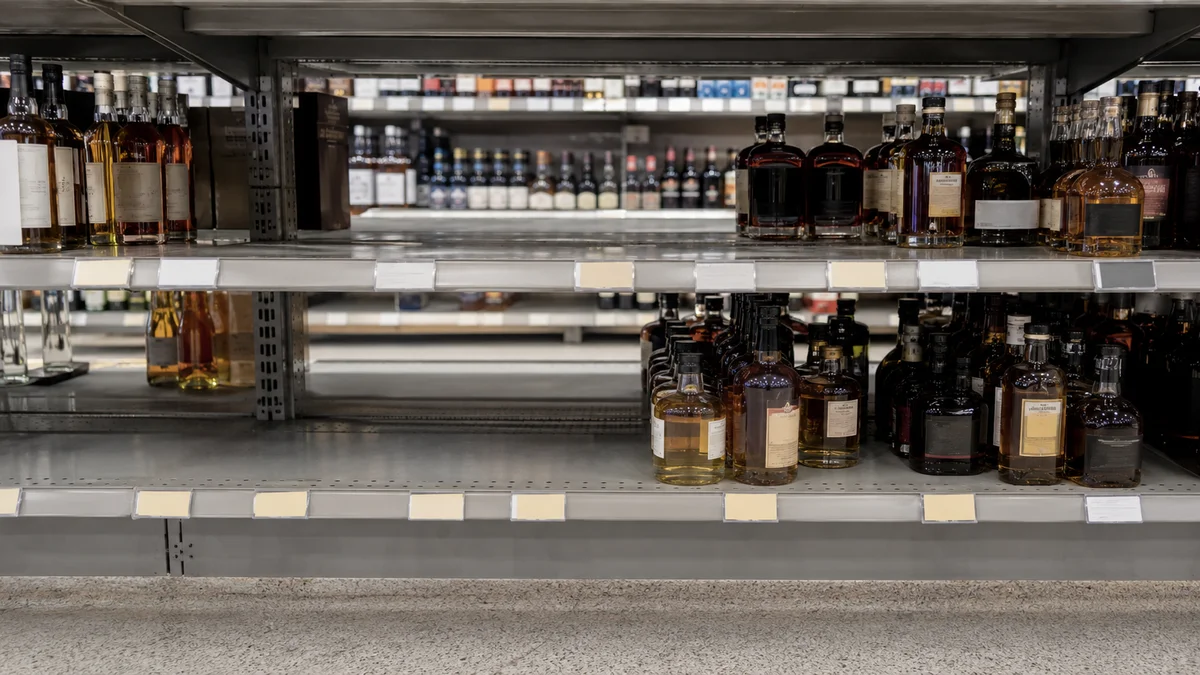
The alcohol bans changed the structure. Eight provinces pulled U.S. beverages from shelves starting March 2025.[19] The bans were popular. Voters rewarded them. They became identity markers for the resistance posture. And then Washington specifically demanded they be lifted as part of any deal.[20] The moment that happened, each premier who had pulled booze held something the U.S. wanted that Ottawa could not deliver.
The resistance tool became a delivery requirement. The provinces went from consultative participants to operational gatekeepers. Not because anyone planned it that way, but because the retaliatory measures that made Team Canada popular were provincial measures, and the U.S. made undoing them a condition of the deal.
By August 2026, Canada’s negotiating structure required the coordinated assent of multiple provincial governments to produce a yes. Trump’s required one decision. That asymmetry was not inherent in the Canadian constitution. It was created by the specific form the resistance took. And no one built a mechanism to convert those multiple provincial inputs into a coordinated output under deadline pressure, because the resistance was never supposed to need converting. It was supposed to be leverage. It became a precondition.
That is the structural irony at the centre of this story. Team Canada’s greatest domestic success created the delivery problem that the consultation machinery could not solve. The more popular the bans became, the harder they were for any premier to surrender. The more Washington wanted them lifted, the more each premier’s cooperation became a precondition for a deal. And the 18-month consultation process never adapted to the structural change its own success had produced.
The Consultation That Wasn’t
The Team Canada consultation apparatus was extensive. The Trudeau government adopted the framework in January 2025, with weekly First Ministers’ calls to coordinate federal-provincial advocacy.[21] Carney inherited it, continued it, and sharpened the political edge. Premiers formally reaffirmed a “unified Team Canada approach” in January 2026 and again in July 2026.[21]
In July 2025 at Huntsville, Ford hosted a first ministers’ meeting. Carney stayed at Ford’s cottage, up past midnight. Houston said he had “tremendous confidence” in the Prime Minister. Ford said a deal was “realistic.”[22] At the same meeting, the premiers agreed: they would not force a trade deal at all costs.[22]
The public record repeatedly documents agreement on broad posture. “No bad deal.” “We won’t accept a deal at any cost.” “Stand together.” The public record does not show premiers collectively adopting specific numerical minimum terms defining what deal they would implement. No premier in the documented record is quoted naming a tariff rate they would accept on steel, aluminum, or autos, or identifying the specific provincial concession they would trade for specific sectoral relief.
The strongest defence of Carney’s approach deserves full weight. The leak risk is real and documented. In October 2025, Ford’s $75 million anti-tariff commercial on American television prompted Trump to terminate trade negotiations entirely.[23] Carney attributed the collapse of that round to the ad.[24] Kinew called Trump a “bad person” during live negotiations in August 2026.[25] Sharing a federal negotiating position with 13 premiers, given that track record, risks sharing it with Washington.
But there is a stronger version of the defence than leak risk alone. If Ottawa asks each premier “what is the minimum tariff relief required before you surrender your leverage?” each premier has an incentive to answer strategically. Ontario demands maximal auto and steel relief. Quebec demands maximal protection for dairy and culture. Manitoba retains the political leverage of alcohol retaliation. Asking provinces for their floor does not automatically reveal Canada’s deliverable floor. It may generate thirteen inflated reservation positions whose intersection is empty.
That is a genuine problem with no easy solution. But its difficulty does not make it optional. Canada has precedents for much deeper provincial integration when provincial implementation is central. During CETA, the European side insisted on provincial participation because the EU required assurance that Canada could deliver commitments falling within provincial jurisdiction.[21] Those negotiations ran on timelines of years. The August 2026 deal arrived in a 72-hour window, after a three-day pause announced 90 minutes before the original deadline.[7] The consultation machinery was built for the first kind of negotiation. The crisis produced the second. And the resistance had created a new delivery dependency that the machinery was never adapted to address.
The Problem Going Forward
The tariffs are at 50 per cent. Carney’s retaliatory tariffs take effect September 8.[6] The CUSMA review is ongoing, with the United States having declined to extend the agreement in its current form on July 1, 2026.[20] At some point, there will be another negotiation. Carney himself said Canada remained willing to negotiate if Washington approached the talks as a partnership between sovereign countries.[6]
Two separate questions follow from what the record shows. The first is historical: did the Team Canada process produce the internal commitments needed to deliver a deal before August 2026? The public record does not establish that it did. The second is forward-looking: unless Ottawa and the provinces establish a mechanism for resolving implementation thresholds before the next deadline, the same gap can recur. The same dynamic produces the same outcome: Carney negotiates a framework, comes back for provincial cooperation, and discovers the cooperation has no pre-agreed terms.
The first article in this sequence said the pause required a unified yes. The pause expired. The deal collapsed. The yes never came. The provincial resistance that made Team Canada popular created the delivery problem that made the yes necessary. And the consultation process never adapted to the structural change its own success had produced.
What Would Change This Assessment
The finding that the public record does not establish pre-committed provincial implementation thresholds would be weakened or falsified by any of the following:
- Documented evidence emerges, through released deal details, disclosed correspondence, or parliamentary disclosure, that before the final negotiating week Ottawa had obtained actionable provincial commitments defining what concessions each province would implement in exchange for specified sectoral outcomes.
- A premier publicly states they communicated specific minimum thresholds to Ottawa during the 18-month consultation period and those commitments were incorporated into the federal negotiating position.
- Evidence that the visible premier resistance on Wednesday and Thursday was coordinated with Ottawa as a deliberate negotiating strategy to strengthen Carney’s hand in Washington. If the resistance was bargaining theatre rather than genuine disagreement, the apparent gap would instead be a managed dynamic, and the relief after the collapse would not indicate an unresolved internal problem.
Separately, the forward-looking concern that the same gap can recur would be addressed if the next round of negotiations demonstrates a changed process in which provincial implementation commitments are resolved before federal negotiators finalize terms. That would indicate the gap has been recognized and closed.