
A ceremony, a foreign rocket, and a shortfall
On the morning of June 10, 2026, a small single-stage rocket lifted off from Spaceport Nova Scotia at 8:51 a.m. local time. It performed normally through the first phase of powered flight, then hit an anomaly later in the boost phase and failed to reach its targeted suborbital altitude. Ground teams recorded telemetry all the way to impact. A second flight planned for the same window was stood down so engineers could review the data. [10]
The rocket was a Barracuda, built by the Dutch firm T-Minus Engineering, not a Canadian vehicle, and not one built by the spaceport's operator. It was the second time in under a year the same vehicle fell short of its target there. The launch doubled as a showcase. Roughly a hundred guests attended; Canadian astronaut Jeremy Hansen pushed the button, federal and provincial politicians were there, First Nations leaders attended, and a delegation of NATO officials came in support of the Starlift initiative Canada had joined. Local lobster harvesters supplied the reception. [10]
Two days later, on June 12, the dominant commercial launch company went public. SpaceX priced its initial public offering at $135 a share and listed on the Nasdaq, an initial market capitalization of roughly $1.77 trillion — the largest IPO on record. [11] It is a provider Canada has itself relied on for access to orbit, and the one a Canadian launch startup is using to loft its own first satellite. The contrast is not an argument that Canada should be SpaceX. It is the calendar: a trillion-dollar launch company listing in New York the same week a foreign test rocket fell short on a single Canadian pad.
None of that, on its own, says anything is wrong with the deal that built the pad. A customer's suborbital test missing altitude is ordinary research. But the week is a useful place to stand and ask a narrower question: in March, Ottawa described this site as a cornerstone of national defence and a place among the spacefaring nations. What, on the documented record, did the government actually commit to — and what did it get?
What was announced, and what exists
The announcement language was expansive. The Department of National Defence called the agreement a step that made Spaceport Nova Scotia "the central foundation for a multi-user spaceport" and a "cornerstone of Canada's defence capabilities." The Minister spoke of reaffirming Canada's "place among the spacefaring nations." [1] [12]
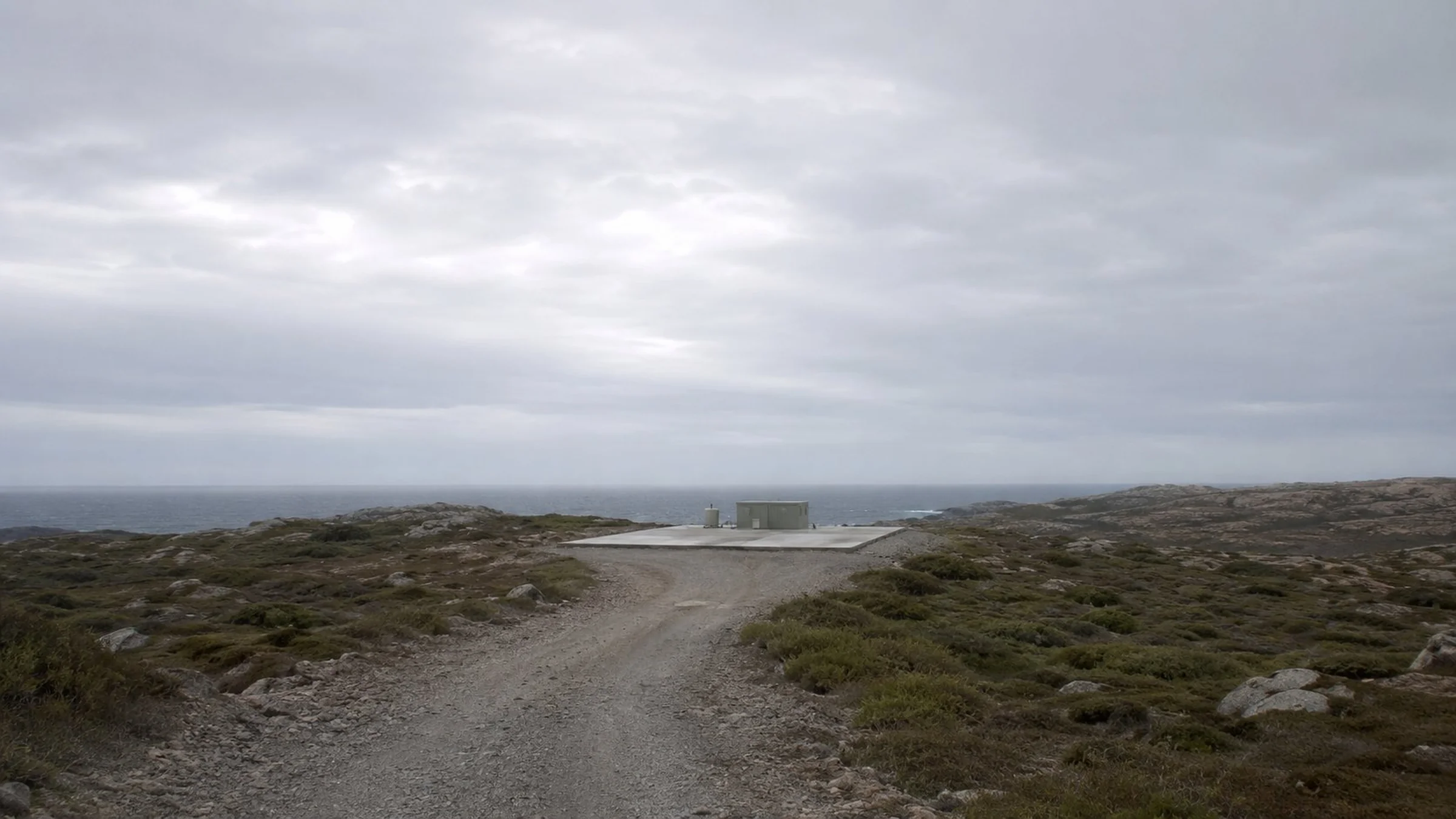
The operational reality on the same record is narrower. The federal agreement itself describes the site as "currently provisioned with a single launch pad suitable for suborbital and orbital launch vehicles." [1] The dedicated DND pad is to reach initial operational readiness only by the end of 2026. No rocket has launched to orbit from the site, or from anywhere in Canada. (By "orbital launch from Canadian soil" we mean a rocket launched from Canadian territory that places a payload into Earth orbit; suborbital test flights, which the site has hosted, do not meet that threshold.) The operator's own forward schedule puts the first orbital attempt, a pathfinder flight by a partner company, no earlier than the third quarter of 2028. [8] [13] The federal transport minister, introducing separate launch legislation in April, said it could be two to three years before Canadians see rockets take off from home soil, and that the announcement was largely about satellites. [14]
This is the gap the rest of the deal sits inside. The announced capability is sovereign launch. The thing actually leased, today, is one pad that has hosted suborbital tests, with the harder milestone, an orbital launch, years out and contingent on vehicles the operator does not build itself. That distance between the framing and the asset is not an accusation. It is the starting condition for asking how the commitment was structured.
The counterparty the Crown selected
Maritime Launch Services is a publicly traded company built around a single project: Spaceport Nova Scotia, on leased provincial Crown land near Canso. Its model is an "airport for rockets": it builds and operates the ground infrastructure while other companies bring the vehicles. The company went public through a 2022 reverse takeover, after its original plan to fly a Ukrainian-designed rocket was disrupted by Russia's 2022 invasion of Ukraine, pushing it toward a multi-tenant model. [15]
Before the lease revenue was recognized, its financial condition was weak, by its own filings. Through the first nine months of 2025 the company reported no meaningful launch revenue, a net loss of roughly $6.9 million over that period, and a working-capital deficiency; its audited statements carried language about a material uncertainty over its ability to continue as a going concern. [6] The position stabilized only after a sequence of capital injections in late 2025 and early 2026: a $10-million equity investment from MDA Space, the conversion of its outstanding debentures, the Export Development Canada credit facility, and then the DND lease itself. [6] [16]
The company's largest insiders, at the 2022 takeover, were its chair and its chief executive. Sasha Jacob, through Jacob Capital Management, held about 28.67% of the company; founder and CEO Stephen Matier, through SilverWing Enterprises, about 21.47%. [15] Jacob's prior firm, Jacob Securities Inc., is part of the public regulatory record: in a 2017 settlement accepted by the Investment Industry Regulatory Organization of Canada, Jacob admitted that between 2013 and 2015 he failed to supervise the firm and promote compliance, and accepted a $100,000 fine, a three-year suspension from acting as the firm's ultimate designated person, and $10,000 in costs. The firm had been suspended in 2015 and its membership was later terminated. [17]
That history is stated here only as part of the documented profile of the company the Crown selected. It is not evidence about how the lease was structured or priced, and no part of the public record we reviewed connects it to the DND decision. Its relevance is confined to the due-diligence question: the public record does not show whether, or how, the Crown weighed the company's governance history when assessing risk, because the due-diligence record itself is not public.
A commitment, and a budget that doesn't visibly contain it
Here is the structural core. Budget 2025 announced the money that authorized this program: $182.6 million over three years, beginning 2025–26, to establish a sovereign space-launch capability, split between capability development led by Defence Research and Development Canada and launch infrastructure led by the Royal Canadian Air Force. [3]
The single MLS lease commits $200 million over ten years. [1] That is larger than the three-year amount Budget 2025 publicly identified for the entire sovereign-launch program, and its term runs seven years past that three-year fiscal window. The public record does not reconcile how the lease fits within, or beyond, that profile: whether the $182.6 million is the full authorizing envelope or only the first three-year slice of a longer obligation is not something the published documents establish. The public record we located does not reconcile how the out-years, years four through ten, are appropriated. Multi-year federal contract payments are ordinarily subject to annual parliamentary appropriation, but no Estimates line, departmental plan entry, or contractual funding clause confirming that mechanism for this lease appears in the public record. The payment profile is also front-loaded: the first $20 million was paid as a lump sum due before March 31, 2026, with $5-million quarterly payments only beginning afterward. [2]
The financing ran through more than one federal arm. Export Development Canada, a Crown corporation, extended a $10-million credit facility to MLS in October 2025. After the DND lump sum arrived, MLS repaid the outstanding balance on that facility, about $5.03 million, on April 10, 2026. [6] Federal money entered through one Crown arm as a loan and was retired with money from another Crown arm's lease, weeks later. A separate $12.9-million Strategic Innovation Fund contribution had also been offered earlier, as a conditional and non-binding term sheet. [7] Stated plainly: a still-developing company was progressively underwritten by several federal instruments, culminating in a lease that made it 97.4% dependent on the department that signed it.
The competition that happened next door
The clearest contrast is inside the announcement itself. On the same day it signed the non-competitive $200-million pad lease, the government ran a competition for the rockets. Through "Launch the North," a three-year, $105-million contest, DND awarded three companies (NordSpace, Canada Rocket Company, and Reaction Dynamics) non-repayable grants of $8.3 million each to develop launch vehicles, against published criteria including delivering a 200-kilogram payload to low Earth orbit. [2] [5]
So the government demonstrably knows how to run a competitive process for sovereign launch, and did, for the vehicle side. The infrastructure side, the larger commitment by an order of magnitude, went to a single company with no competitive solicitation, advance contract award notice, or sole-source justification that we could locate in the procurement record. We searched CanadaBuys and the federal proactive-disclosure contract record for Maritime Launch Services, Spaceport Nova Scotia, and the DND lease; we located the competitive vehicle challenge, but not a tender, award notice, or published sole-source justification for the pad lease. A federal contract over $10,000 can be proactively disclosed up to four to five months after it is signed, so this absence is consistent with normal publication timing and is not, on its own, evidence of non-disclosure. One of the grant recipients, NordSpace, was by several measures further along on the thing the announcement was about: it had twice brought its own Canadian-built rocket to the pad and cleared a provincial environmental assessment for its own spaceport in Newfoundland. [13] The point is not that the government picked the wrong company. It is that the record does not show how, or whether, it chose at all on the infrastructure side.
The retroactive year, and the question Parliament asked
The lease term is dated "retroactive to April 1, 2025," though it was announced on March 16, 2026, almost a full year later. [1] The company's filings tie part of that retroactive period to a pre-existing Facility Usage Agreement dated September 1, 2025. [6] That accounts for the back half of the backdated term. It leaves the first five months, April through August 2025, without a documented basis in the public record for what the lease's effective date covers. Treasury Board's procurement directive contemplates approvals preceding the entry into a contract, and requires that non-competitive decisions be "fully justified and documented"; it does not provide a general authority for retroactive effective dates. [18] We note the policy mechanics; we do not characterize this contract against them, because the justifying record is not public.
That absence is not only our observation. Between April 23 and 28, 2026, four written questions were filed in the House of Commons about this exact agreement. Q-1120 asks for the criteria used to select Maritime Launch, whether any other applicants applied, when the minister learned the company leases the same provincial land for $13,500 a year, the rationale for exempting the launch pad from a federal impact assessment, and the rationale for backdating the lease to April 1, 2025. [19] Q-1131 asks for the lease terms, the allocation of funds, whether foreign entities received funding, which advisory bodies were consulted and their findings, and all due-diligence, risk, and market analyses. [9] Q-1147 asks when discussions with the company began, who initiated them, and who drafted the agreement. [20] Together they are, almost line for line, a parliamentary request for the documents this audit found missing.
As of writing, the public status of those responses is itself part of the record. Q-1131 and Q-1147 are listed as awaiting a response. A response to Q-1120 has apparently been tabled, but it could not be read: the House of Commons written-questions system returns a "system error" page in place of the document, so its contents are, for now, inaccessible to the public through the official record. We have not seen the Q-1120 response and make no claim about what it contains; if and when it becomes readable, we will report what it discloses and update this article. What can be said today is narrower and verifiable: the analysis underpinning a $200-million commitment was not proactively disclosed, four questions had to be filed to seek it, and none of the answers is publicly readable as of publication.
What the public has, then, is an announcement rich in strategic language and a paper trail thin on the analysis underneath it. The commitment exceeds the three-year amount publicly identified for the program. No competitive procurement or sole-source justification is on the public record. No value-for-money case is on the public record. The rationale for backdating a year of the term is, for five months of it, not on the public record. None of that proves the deal is unsound. It means the deal asks to be taken on trust, and the body whose job is to grant or withhold that trust has formally asked to see the receipts, four times over, with no readable answer yet returned.