
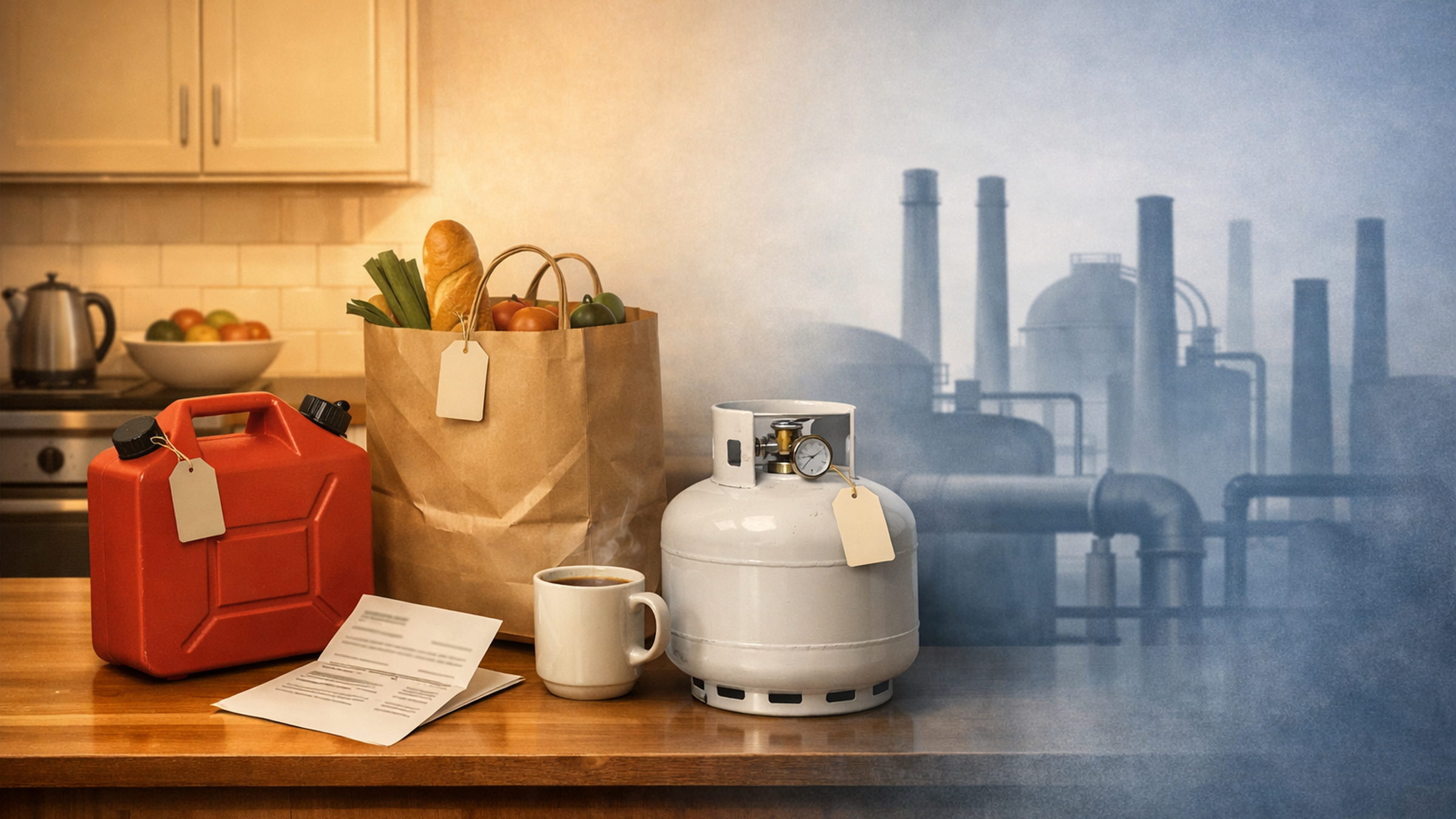
What Changed in April 2025
On April 1, 2025, the federal government set the consumer fuel charge to zero. [1] The Canada Carbon Rebate — the quarterly payment that returned fuel charge revenue to households — ended with it. [2]
The consumer fuel charge was one component of a multi-layered carbon pricing system. Two other federal layers continue. The Output-Based Pricing System prices industrial emissions at $110/tonne in 2026, rising to $170/tonne by 2030. [3] The Clean Fuel Regulations require fuel suppliers to reduce the carbon intensity of gasoline and diesel, adding an estimated 4–6¢/L in 2026 and rising to 6–17¢/L by 2030. [4] [5]
Neither layer appears on a consumer receipt. Neither comes with a rebate.
Provincially, British Columbia eliminated its consumer carbon tax but kept its industrial OBPS. [12] Quebec's cap-and-trade system continues. [13] Saskatchewan dropped out entirely. [14] Alberta froze its TIER industrial price at $95/tonne — below the federal schedule — with over 24 million surplus offset credits available in the market as of late 2024. [6] [7]
The Two-Track Design
Canada's carbon pricing had two tracks. The consumer fuel charge was visible — applied at the point of sale on gasoline, diesel, and natural gas. [15] The Output-Based Pricing System applied to industrial facilities emitting more than 50,000 tonnes of CO₂ equivalent per year, with free allocation below an output benchmark. Only emissions exceeding the benchmark incurred the charge. [3] [16]
The Canada Carbon Rebate connected the two: 90% of consumer fuel charge revenue was returned to households as quarterly payments. On aggregate, the PBO found the rebates exceeded the revenue collected — a net fiscal cost of approximately $1.5 billion. [17] Whether any individual household came out ahead depended on province, household size, heating source, and commuting distance. The system attempted to be progressive. The result varied by household.
The Assumption That Broke
The design assumed substitutability: when carbon-intensive goods cost more, people switch to lower-carbon alternatives. In October 2023, the federal government acknowledged that assumption didn't hold for Atlantic heating oil households — nearly 30% of Atlantic Canadian homes heat with oil, they are disproportionately low-income and rural, and no affordable alternative existed. The government exempted heating oil from the carbon charge through 2027. [9]
The exemption was targeted. Its political effect was not. If the system didn't work for people who couldn't switch, and the government was willing to grant exceptions, every region with similar constraints asked the same question. The consumer fuel charge was eliminated sixteen months later.
Who Pays What — Households vs. Industry
Households
The Clean Fuel Regulations add an embedded cost to every litre of gasoline and diesel. The PBO assessed the CFR as "broadly regressive": lower-income households spend 0.62% of disposable income on the affected costs, compared with 0.35% for higher-income households. By 2030, the estimated annual household cost ranges from $231 (lower income) to $1,008 (higher income), with Saskatchewan households facing the highest average burden at approximately $1,117/year. [5]
There is no consumer rebate for the CFR. There never was one. The cost is embedded in wholesale fuel prices and is not itemized at the pump. Natural gas and electricity prices also carry embedded carbon costs from industrial pricing that pass through to residential bills without a return mechanism.
Industry
The federal OBPS headline rate is $110/tonne in 2026. [3] Facilities that meet their output-based standard pay nothing on emissions below the benchmark and can earn surplus credits. Alberta froze its TIER compliance price at $95/tonne indefinitely. [6] According to carbon market analysts, compliance credits in Alberta were trading at a substantial discount to the headline rate in late 2025, reflecting the large surplus of available credits. [18] Alberta then amended TIER in December 2025 to allow credits for technical studies and planning activities that do not require actual emissions reductions. [8]
Alberta's TIER regulation includes a Compliance Cost Containment Program offering relief when costs exceed 3% of a facility's sales or 10% of profit. [11] No equivalent cost containment exists for households.
The Trajectory
The federal industrial schedule rises from $110/tonne in 2026 to $170/tonne by 2030 — if provinces comply. Alberta and Saskatchewan are actively diverging from that schedule. [6] [14] The Alberta–Ottawa MOU includes a commitment to ramp TIER to $130/tonne, but the timeline remains uncertain. [19] Given the credit surplus, provincial price freezes, and new non-reduction compliance pathways, effective industrial costs may remain materially below headline rates.
The CFR cost to consumers rises every year by design as carbon intensity reduction targets tighten toward full stringency in 2030. [4] The consumer carbon rebate remains at zero.
The Substitution Problem
A rural commuter driving 45 minutes to work with no transit option and no EV in their budget absorbs the CFR cost on every fill-up. The price signal does not change the drive. It changes the cost of the drive.
A family loading a minivan for a camping weekend pays embedded carbon costs on the gasoline, the propane for the stove, the fuel for the outboard motor, and the propane for the camper. No electric substitute exists for any of these at their price point.
An Atlantic household still heating with oil faces the structural problem the 2023 exemption was meant to address. The infrastructure hasn't changed. A heat pump retrofit costs $10,000–$15,000 and requires capital they don't have.
A low-income renter in Toronto who doesn't own a car still absorbs carbon costs through higher grocery prices (freight and fertilizer passthrough), higher electricity bills (industrial pricing passthrough), and higher rent (building materials carry embedded carbon costs from cement and steel production). This person has no fuel consumption to substitute away from. They're paying carbon costs with no behaviour available to change.
The PBO's regressivity finding on the CFR understates the full gap: higher-income households are more likely to have already substituted — they bought the EV, installed the heat pump, live closer to work. They pay less in embedded carbon costs and had the capital to opt out of the price signal. The costs concentrate on those least able to respond. [5]